
The parenting influencer has a nanny, a cleaner and a massive diamond ring. So why do the rest of us feel like we’re failing at parenthood?
Somewhere on Instagram, a mother is preparing an organic breakfast in a kitchen the size of a small London flat. Her children are dressed in matching linen, nobody is crying, and the kitchen island is decorated with fresh flowers that appear to have been arranged by someone who has never had to remove Weetabix from a ceiling.
She speaks softly about the importance of being present. Of slowing down. Of choosing connection over correction. She reminds us that children don’t need perfect parents, just emotionally available ones.
All very lovely.
What she doesn’t mention is that someone else cleaned the kitchen, somebody probably helped with the children, and the reason she can spend forty minutes making pancakes shaped like woodland animals is that she isn’t simultaneously trying to get to work, find a missing school shoe and remember whether today is the day her child needs to bring in a Victorian costume.
Welcome to the strange world of parenting influencers, where an expensive lifestyle is increasingly presented as a parenting philosophy, and the rest of us are left wondering why we can’t seem to get motherhood quite so beautifully right.
Don’t get me wrong. There’s nothing wrong with having privilege. Have a nanny, a cleaner and a massive diamond ring large enough to knock someone out. Enjoy every bit of it.
There’s something questionable, however, about turning that privilege into parenting advice while pretending everyone starts from the same place.
And that distinction seems to disappear remarkably quickly once somebody acquires a large following and a discount code.
Scroll through parenting content and you will encounter endless advice about emotional regulation, gentle discipline, nutritious meals, sensory activities, meaningful family rituals and the perfect morning routine, preferably performed with a matcha latte in one hand and whichever smoothie currently promises glowing skin, hormonal balance and eternal youth in the other.
Much of this advice is perfectly sensible. Some of it is genuinely helpful. But somewhere along the way, sharing personal experiences of motherhood has turned into claiming authority on almost every aspect of raising children.
And this is where I have another problem.
Having children makes you a parent. It doesn’t automatically make you an expert in child development, psychology or nutrition. Reading a few books, following a parenting trend or successfully raising your own children does not qualify you to offer universal advice to thousands of families whose circumstances, needs and children may be entirely different from yours.
Personal experience is valuable. It can be reassuring, insightful and enormously helpful to other parents. But experience and expertise are not interchangeable, no matter how many followers someone has. And while some advice is simply impractical, other advice can be genuinely harmful, particularly when complex developmental, psychological or nutritional needs are presented as though one approach works for every child. What helped your toddler doesn’t automatically make it appropriate for someone else’s.
A large audience is not a professional qualification. Neither is a beautifully decorated nursery.
And yet, parenting advice is increasingly delivered with extraordinary confidence by people whose principal qualification appears to be that they have children, a camera and an exceptionally good understanding of Instagram’s algorithm.
The problem isn’t simply that some influencers have more resources than the parents watching them. It’s that the advantages making their own family lives easier are often invisible, while their advice is presented as something everyone should be able to follow.
What appears effortless on screen is often heavily supported off screen: nannies, grandparents, cleaners, private childcare, flexible working arrangements, financial security and, increasingly, gifted products and brand-funded convenience.
The audience sees the result. It doesn’t always see the infrastructure.
Then the result is presented as discipline, intentional living or an enlightened approach to parenting. Sometimes it is. Sometimes it’s simply a life with considerably more help.
We have become rather obsessed with the idea of the calm parent. The mother who never raises her voice, who gets down to her child’s eye level, acknowledges their feelings and gently guides them through disappointment with the patience of a Buddhist monk.
And yes, emotional regulation matters. As a child therapist, I know how important it is for children to experience adults who can help them manage overwhelming feelings.
But there is something almost absurd about discussing parental regulation without discussing the circumstances in which parents are expected to regulate.
Patience is easier after a full night’s sleep. Consistency is easier when another adult can take over. Connection is easier when you’re not rushing between work, childcare, cooking, laundry and the administrative burden of keeping several human beings alive and reasonably presentable.
Try responding to your child’s third meltdown of the morning with thoughtful curiosity when you’re already late for work, you’ve slept four hours and the washing machine has developed an alarming new noise.
Now try doing it after a peaceful morning, a Pilates class and a breakfast prepared in a spotless kitchen.
The parenting advice might be identical. The conditions are not.
Yet social media has a remarkable ability to turn those different conditions into a comparison of character. One mother is calm because she has worked on herself. Another loses her patience because she needs to work on herself.
Apparently, exhaustion is now a personality flaw.
A parent can understand emotional regulation perfectly and still struggle to practise it consistently when their own life offers very little room to recover. Emotional capacity is affected by stress, sleep, relationships, financial pressure and the support available.
There is also something peculiar about the way ordinary childhood has been repackaged as a luxury lifestyle.
A bowl of water becomes a sensory station. A shelf becomes a Montessori-inspired environment. A trip outdoors becomes an opportunity for intentional nature-based learning, preferably photographed against an aesthetically pleasing woodland backdrop.
And apparently every child now requires a playroom that looks like a Scandinavian furniture showroom.
Beautiful spaces and thoughtful activities can be lovely. But a child’s emotional development is not measured by the price of the wooden toys in their bedroom, and a beautiful home tells us very little about the emotional relationships inside it.
The difficulty begins when aesthetics become confused with attachment, and a particular lifestyle is sold as visible proof of doing childhood properly.
Parents begin comparing their ordinary Tuesday with somebody else’s professionally edited highlight reel. Their homes look messier, their routines feel more chaotic, and their children seem considerably less interested in eating organic vegetables arranged into the shape of a rainbow.
They begin to wonder what they’re getting wrong.
Possibly nothing. Perhaps their children simply haven’t been briefed on the content strategy.
There is a serious issue underneath all this beautiful nonsense.
Parenting today is discussed in increasingly sophisticated psychological language. We talk about attachment, emotional safety, co-regulation, boundaries, trauma and the importance of responding to children’s emotional needs.
In many ways, this is progress. Greater awareness of children’s emotional worlds can help adults understand behaviour that previous generations might simply have punished or dismissed.
But knowledge has also created new expectations. Parents are now expected to remain psychologically informed, emotionally available, self-aware and consistently regulated while managing everything else that comes with raising children.
A mother who snaps at her child after an exhausting day may no longer think, I lost my temper. I need to apologise.
She may think, Have I damaged my child’s emotional development? Am I repeating generational trauma? Have I failed to create a psychologically safe environment?
What was once an ordinary, regrettable moment can become a full-scale internal assessment of parental competence.
And then she opens Instagram.
There, another mother is explaining how she handles difficult behaviour without ever needing to raise her voice. Her hair looks wonderful. The kitchen is immaculate. Her children appear to have accepted emotional regulation as a family hobby.
Naturally, there is a course available.
And that brings us to another uncomfortable question: how much money is being made from parental insecurity?
Parenting is a particularly attractive market because the emotional stakes are so high. Suggest that someone needs a better handbag and they may decide they can live without one. Suggest that their child’s emotional wellbeing depends on buying the right product, following the right routine or learning the right parenting method, and the decision becomes rather more complicated.
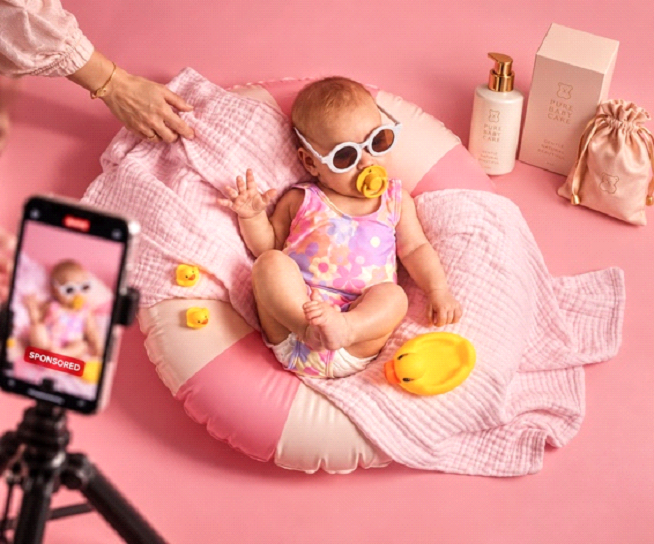
The marketing is often subtle. A peaceful morning routine happens to feature a sponsored product. A discussion about family connection leads to a paid programme. A supposedly candid glimpse into daily life includes several carefully placed brands.
Not every influencer does this dishonestly. Some disclose advertising clearly, acknowledge their support systems and share genuinely useful information.
But we should be asking whether parental insecurity is increasingly being treated as a marketing opportunity.
The message doesn’t have to be you’re a bad parent. It only needs to be you could be doing better.
Preferably with free delivery.
As a child therapist, I often encounter parents who care deeply about their children yet feel ashamed, inadequate or convinced they are doing something wrong because family life doesn’t resemble the version they are constantly being shown.
They understand the importance of patience and connection. They want to respond thoughtfully when their children struggle. But wanting to be emotionally available and having the capacity to remain emotionally available throughout every difficult moment are not the same thing.
Sometimes the issue isn’t a lack of parenting knowledge. It’s the absence of time, rest, support and breathing space.
Children need emotionally responsive adults, but adults also need conditions that make emotional responsiveness possible. We cannot keep demanding endless patience from people whose own needs are treated as an inconvenience.
None of this means wealthy parents are incapable of offering good advice, or that influencers with support systems cannot be loving, thoughtful and emotionally attuned. Of course they can.
Privilege does not cancel out parenting skill. But neither should it be mistaken for parenting skill.
The question isn’t whether parenting influencers should stop sharing beautiful family moments. It’s whether they should stop presenting a heavily supported lifestyle as an achievement available to everyone with enough discipline, intention and emotional maturity.
If somebody wants to show us their lovely home, their happy children and their beautifully organised life, by all means. Enjoy the flowers. Admire the linen. Appreciate the kitchen.
But perhaps spare us the lecture about how everything changed when they simply decided to slow down and prioritise connection.
Some parents would love to slow down. Their employer, landlord, electricity bill and childcare arrangements have other ideas.
Good parenting does not belong to the affluent. Loving, attuned, imperfect parents exist in every income bracket.
Perhaps it’s time we stopped judging ordinary parenting against an extraordinary level of support — especially when that support has been carefully edited out of the picture.